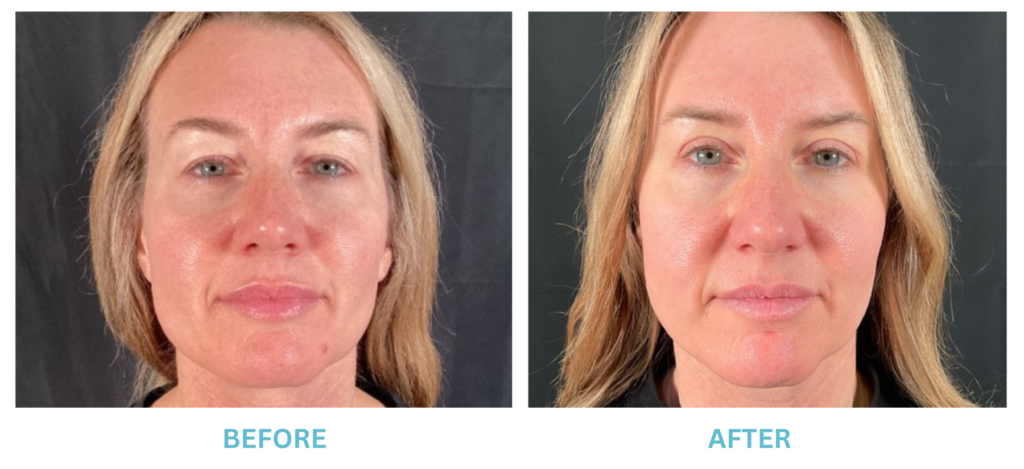



Facial harmony is rarely about one feature standing out. It is usually about how every feature relates to the next: the forehead to the nose, the nose to the lips, the lips to the chin, and the chin to the neck. When the chin is recessed or under-projected, the entire face can feel slightly out of proportion, even when the nose, cheeks, eyes, and jawline are naturally attractive.
That is why chin augmentation for facial balance has become such an important conversation in cosmetic surgery. Chin augmentation can strengthen the lower face, refine the side profile, and help features look more aligned without making the face appear overdone.
For patients who feel their profile lacks definition or their lower face looks soft, a chin implant may be the subtle structural detail that brings everything into better proportion.
Read on to learn how chin augmentation works, why facial thirds matter, and how a carefully chosen chin implant can create a more balanced, refined, and confident appearance.
What Is Chin Augmentation?
Chin augmentation is a cosmetic surgical procedure designed to improve the shape, projection, and overall proportion of the chin. Most commonly, this is achieved through the placement of a chin implant, which enhances lower facial structure and creates better balance between the chin, jawline, lips, and nose.
For patients with a naturally recessed or under-projected chin, surgical chin augmentation can provide long-lasting structural enhancement that complements the face’s natural features. The procedure is customized to each patient’s anatomy and aesthetic goals, allowing for subtle refinement or more noticeable definition depending on the desired outcome.
For patients considering chin augmentation in Springdale, AR, the goal is not to create a chin that appears artificial or overcorrected. Instead, surgical chin augmentation is designed to create better facial balance, helping each feature work together more naturally. When properly planned, a chin implant can enhance facial proportions while maintaining a look that feels authentic and uniquely suited to the individual.

The Power of Proportion
Facial balance begins with proportion, not perfection. Many patients focus on a single feature when they look in the mirror. They may feel their nose looks too prominent, their jawline is not defined enough, or their face lacks structure from the side. But often, the issue is not one isolated feature. It is the relationship between features.
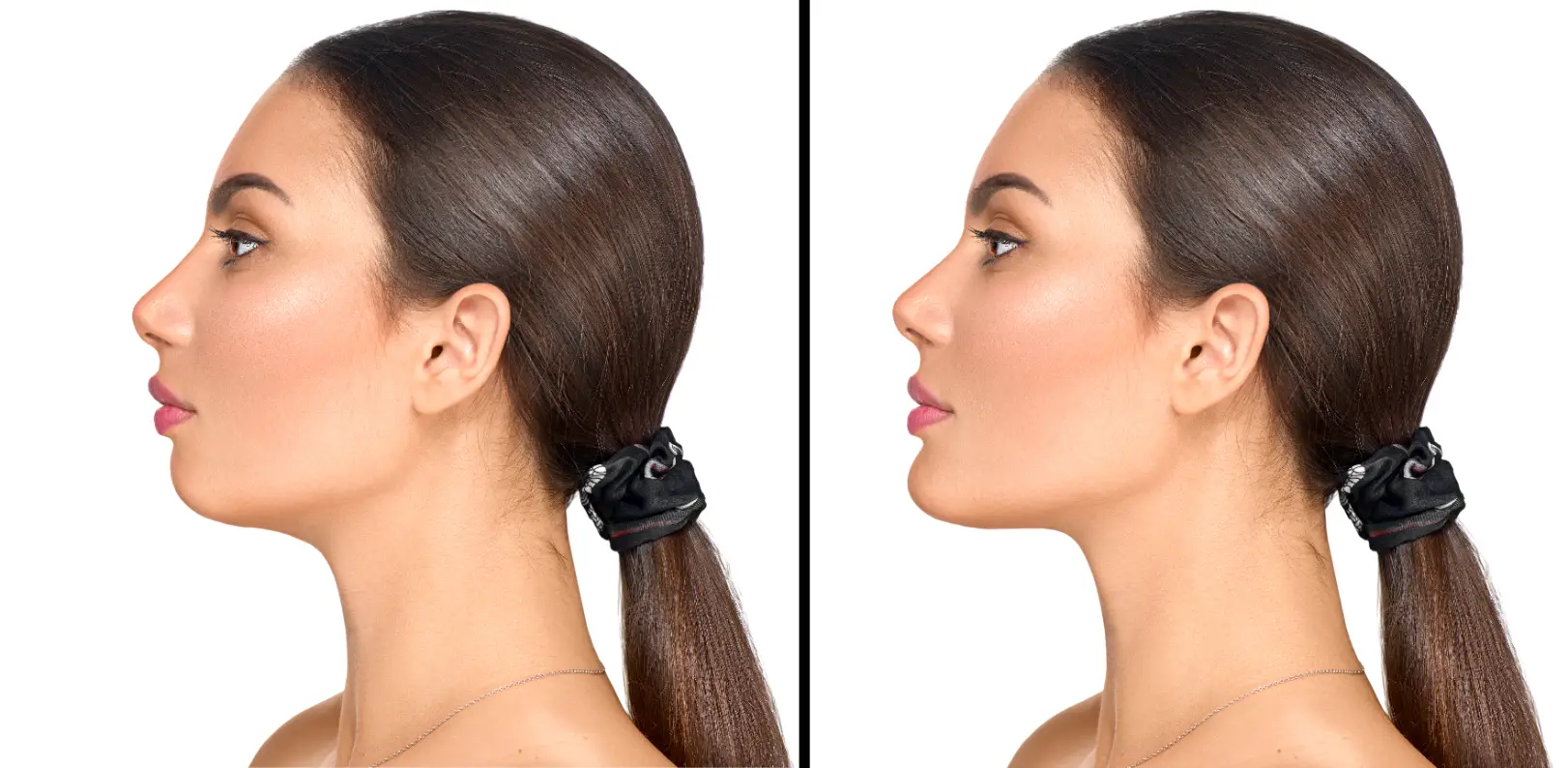
The chin plays a quiet but powerful role in this relationship. Because it anchors the lower face, it affects how the nose, lips, jawline, and neck are perceived. When the chin is too small or recessed, the upper and middle face can appear more dominant. The nose may look larger, the neck may look fuller, and the jawline may seem less crisp.
This is where chin implant facial proportions become important. A thoughtfully selected chin implant can add projection and structure in a way that helps the face look more cohesive. The result is not necessarily a dramatic change.
In many cases, the best outcome is when people notice that the face looks more balanced without immediately knowing why.
1. It Supports Facial Thirds
Facial thirds are one of the most important concepts in aesthetic balance. In cosmetic surgery, the face is often viewed in three horizontal sections: the upper third, middle third, and lower third.
The upper third includes the forehead area, the middle third includes the nose and cheeks, and the lower third includes the lips, chin, and jawline. When these areas feel proportionate, the face tends to look more harmonious.
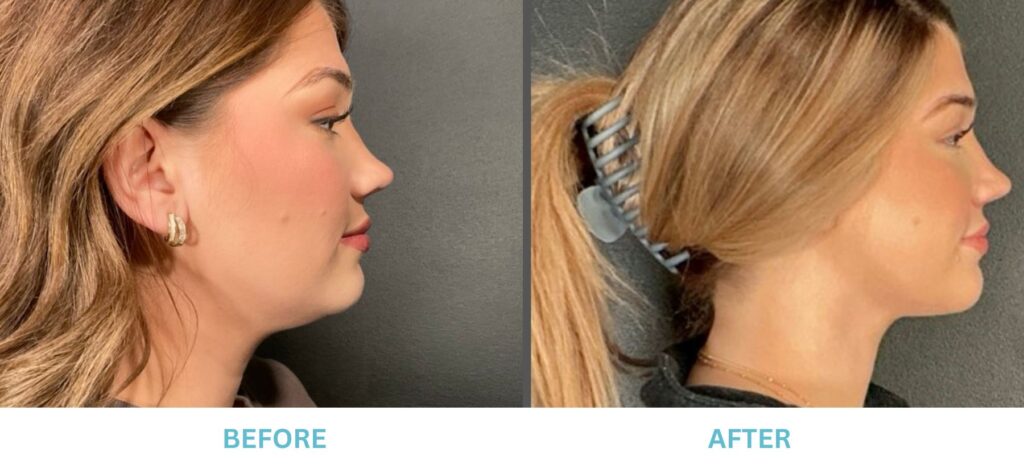
The chin has a major influence on the lower third. If the chin is recessed or underdeveloped, the lower third may appear shorter, weaker, or less defined. This can make the entire face feel visually unbalanced, even if the other features are attractive on their own.
That is why facial thirds cosmetic surgery often includes an evaluation of chin projection. A surgeon may look at how the chin relates to the lips, nose, neck, and jawline before recommending treatment. The goal is not to force the face into a rigid formula. The goal is to understand how subtle structural changes can create a more elegant overall appearance.
A chin implant can help bring the lower third into better proportion by adding projection where it is naturally lacking. This may make the profile look stronger, the jawline cleaner, and the entire face more composed.
2. It Refines the Side Profile
The side profile is where a chin imbalance often becomes most noticeable. From the front, a weak chin may simply make the lower face look softer. From the side, however, the imbalance can become clearer.
A recessed chin may make the nose appear more prominent, the lips appear more projected, or the neck appear less defined. This is not always because those features are actually too large or poorly shaped. It may be because the chin does not provide enough support.
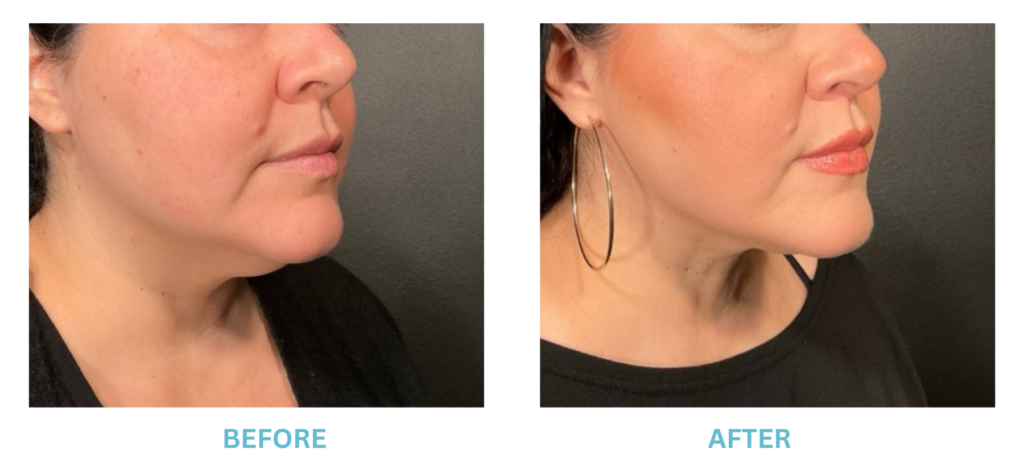
Chin augmentation can improve the profile by creating a better visual line from the forehead to the nose, lips, chin, and neck. When the chin projects properly, the entire side profile can look more intentional and balanced.
A well-planned chin implant can give the lower face more presence without making the chin look artificial. It can help the face look stronger, more defined, and more harmonious from every angle.
3. It Balances the Nose
The relationship between the nose and chin is one of the most important parts of profile aesthetics. A nose can look larger when the chin is under-projected. This happens because the face lacks enough lower-face structure to visually balance the projection of the nose.
Even a beautifully shaped nose may seem more dominant when the chin is recessed. Chin augmentation does not change the nose, but it can change how the nose is perceived. By improving chin projection, the face may look more proportionate from the side.
The nose may appear less prominent because the lower face now provides better balance. This is why chin evaluation is often important in facial cosmetic planning. Sometimes, patients believe they need a more dramatic change to the nose when the real issue is profile proportion.
In other cases, chin augmentation may be recommended alongside other facial procedures, but the central idea remains the same: balance matters more than isolated correction.
4. It Defines the Jawline
The chin is the central anchor of the jawline. When the chin is weak, the jawline may appear less structured from both the front and side. Even if the jaw itself has good shape, a recessed chin can make the lower face look softer or less defined.
Chin augmentation helps strengthen this central point, giving the jawline a clearer and more polished appearance. A chin implant can improve the transition from the chin to the jaw, creating better lower-face continuity.
This does not mean every patient needs a sharply sculpted jaw. Some patients want a softer, more elegant contour, while others want stronger definition. The implant should be chosen based on the patient’s anatomy, facial proportions, and aesthetic goals.
This is where customization becomes essential. Chin implants come in different shapes and sizes. Some add more forward projection. Others add subtle width or contour. A refined surgical plan considers what the face actually needs instead of applying the same look to every patient.
5. It Improves the Neck Line
The chin and neck are closely connected visually. A recessed chin can make the neck look fuller, shorter, or less defined. This can happen even in patients who do not have significant excess fat beneath the chin. Without enough chin projection, the transition between the lower face and neck may appear less crisp.
Chin augmentation can help create a more elegant chin-to-neck angle. By bringing the chin into better proportion, the neck may look longer, and the jawline may appear cleaner. This can be especially helpful for patients who feel their lower face lacks definition in photos.
This benefit is subtle but powerful. A stronger chin can give the entire lower face a more refined framework. The result is often a profile that looks smoother, more sculpted, and more balanced.
Balance Begins at the Chin
Facial beauty is not about perfect features. It is about proportion, harmony, and the quiet balance between each part of the face.
Chin augmentation can play a powerful role in that balance by improving lower-face projection, refining the side profile, supporting the jawline, and helping the nose, lips, neck, and chin work together more naturally. For patients with a weak or recessed chin, a carefully selected chin implant can bring features into proportion without creating an overdone look.
For those considering chin augmentation in Fort Smith and Springdale, AR, or exploring weak chin correction in NW Arkansas, Swetnam Cosmetic Surgery offers a thoughtful, proportion-focused approach to facial enhancement.
With the right plan, chin augmentation can do more than improve the chin. It can bring the entire face into better balance. So what are you waiting for? Get in touch with us today to schedule your consultation!